SMH in texting means Shaking My Head. People use it to show disappointment disbelief frustration or annoyance. You’ll often see it on TikTok Snapchat Instagram WhatsApp and regular text messages when someone reacts to something surprising or frustrating.
Many people search for this term because they see it in online conversations and want to understand what the sender is trying to express. Internet slang changes quickly and abbreviations like SMH are now part of everyday digital communication.
Whether you’re new to texting slang or simply curious about social media language understanding SMH can help you follow conversations more easily.
In this guide you’ll learn exactly what SMH means where people use it how to respond to it and see plenty of real world examples.
SMH Meaning in Text
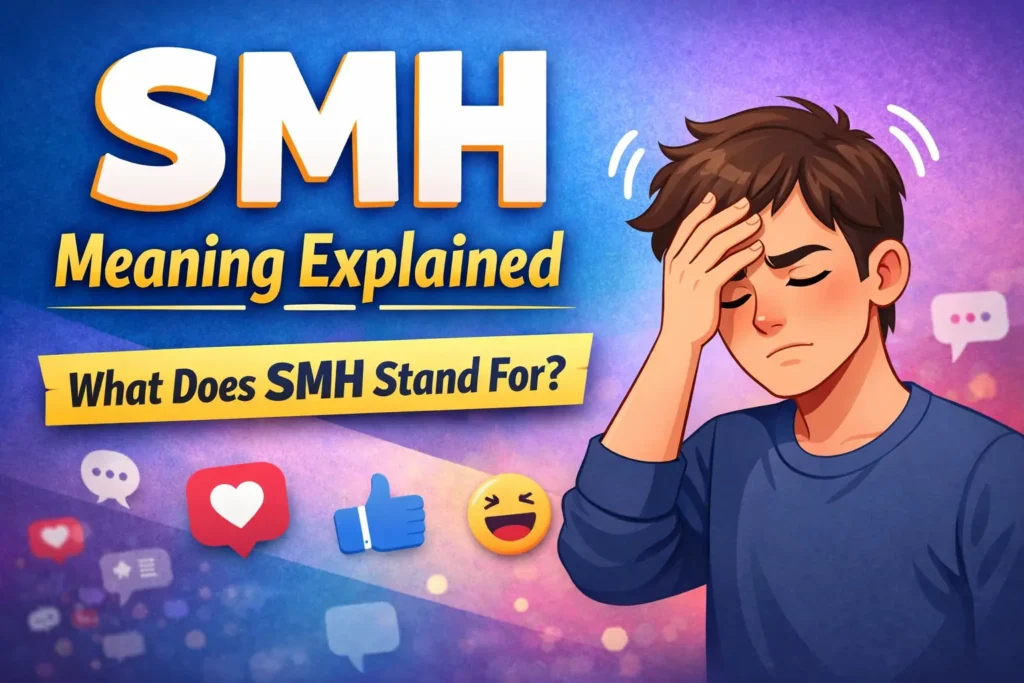
SMH stands for “Shaking My Head.”
It is an internet slang acronym used when someone wants to show disappointment, disbelief, frustration, embarrassment, or mild annoyance.
Rather than typing a long response, people simply write “SMH” to express how they feel about a situation.
For example:
“You forgot your wallet again? SMH.”
In this case, the person is expressing frustration or disbelief.
Is SMH an Acronym or Abbreviation?
SMH is an acronym because each letter represents the first letter of a phrase:
- S = Shaking
- M = My
- H = Head
Over time, it became a common part of online slang and texting culture.
What Does SMH Mean in Everyday Conversations?
In daily chats, SMH usually means:
- “I can’t believe this.”
- “That’s disappointing.”
- “Why would someone do that?”
- “This is frustrating.”
- “That makes no sense.”
The exact meaning depends on the context.
Where People Use SMH
SMH appears on nearly every major communication platform.
TikTok
On TikTok, users often comment “SMH” under videos showing poor decisions, funny mistakes, or unbelievable situations.
Example:
“He tried to microwave a metal spoon. SMH.”
Snapchat
People use SMH in private messages when reacting to something surprising or frustrating.
Example:
“You stayed up until 5 AM again? SMH.”
Instagram users frequently use SMH in comments, captions, and direct messages.
Example:
“Missed the concert because I forgot the tickets. SMH.”
Friends and family often use SMH in casual group chats.
Example:
“The internet stopped working during the meeting. SMH.”
SMS Text Messages
Even traditional texting includes SMH because it’s quick and easy to type.
Example:
“I took the wrong bus home. SMH.”
Real Chat Examples
Below are realistic texting conversations showing how people use SMH.
Example 1
A: I forgot my homework again.
B: SMH.
A: I really need to get organized.
Example 2
A: He spent all his money on snacks.
B: SMH, seriously?
A: Yep.
Example 3
A: I woke up late for work.
B: SMH.
A: My alarm never went off.
Example 4
A: She texted her ex again.
B: SMH.
A: I know.
Example 5
A: I left my phone at home.
B: SMH.
A: Worst day ever.
Example 6
A: He missed the train because he was watching videos.
B: SMH.
A: That’s exactly what happened.
Example 7
A: I accidentally deleted my project.
B: SMH.
A: Luckily I had a backup.
Example 8
A: They forgot my food order.
B: SMH.
A: Now I have to wait again.
Example 9
A: I studied the wrong chapter.
B: SMH.
A: I can’t believe it.
Example 10
A: He wore flip-flops in the snow.
B: SMH.
A: Everyone was staring.
How to Reply When Someone Says “SMH”
The best response depends on the conversation and tone.
Funny Replies
- “I deserve that.”
- “Don’t judge me.”
- “I’m trying my best.”
- “It seemed like a good idea at the time.”
- “My brain took a day off.”
Casual Replies
- “Yeah, I know.”
- “My mistake.”
- “You’re right.”
- “I messed up.”
- “Lesson learned.”
Friendly Replies
- “Haha, fair enough.”
- “Thanks for keeping me honest.”
- “I know, not my finest moment.”
- “You’re probably right.”
- “I’ll do better next time.”
Neutral Replies
- “Understood.”
- “I see your point.”
- “That’s fair.”
- “Okay.”
- “Got it.”
Is SMH Rude or Offensive?
Generally, SMH is not considered offensive.
However, the tone depends on how it is used.
When It’s Usually Fine
People commonly use SMH among:
- Friends
- Family members
- Classmates
- Online communities
In these situations, it often feels casual and harmless.
When It Can Sound Rude
SMH may seem rude if:
- Used repeatedly
- Sent during an argument
- Directed at someone’s serious mistake
- Used in a mocking way
Because it expresses judgment or disappointment, some people may take it negatively.
Is It Safe to Use?
Yes. In most casual conversations, SMH is perfectly acceptable.
Is It Appropriate at School or Work?
For informal conversations, it is generally fine.
In professional emails, business meetings, academic papers, or formal communication, it’s better to avoid slang and use complete sentences instead.
Who Uses This Term?
SMH is popular across many age groups.
Teenagers
Teenagers use it frequently in texting and social media conversations.
Gen Z
Gen Z uses SMH regularly because internet slang is a major part of online communication.
Millennials
Many millennials also use SMH, especially those active on social media.
Older Users
Some older users understand and use the term, although less frequently.
Common Platforms
You’ll often find SMH on:
- TikTok
- Snapchat
- X (formerly Twitter)
- SMS messages
How Common Is It?
SMH is one of the most recognizable internet acronyms.
Although newer slang terms appear every year, SMH remains widely understood across the internet.
Origin of the Term
The exact origin of SMH is somewhat difficult to pinpoint.
Early Internet Culture
The phrase became popular through online chat rooms, instant messaging services, and internet forums during the early days of digital communication.
As texting became more common, users looked for faster ways to express emotions.
Social Media Influence
Platforms such as Twitter, Facebook, and later TikTok helped spread the term to millions of users worldwide.
Because character limits once encouraged shorter messages, acronyms like SMH became extremely useful.
Is the Origin Certain?
Not entirely.
While internet historians generally agree that SMH emerged from early online communication culture, identifying one exact creator or first usage is difficult.
Comparison Table
| Term | Meaning | Type | Usage | Popularity |
|---|---|---|---|---|
| SMH | Shaking My Head | Acronym | Shows disappointment or disbelief | Very High |
| IDK | I Don’t Know | Acronym | Expressing uncertainty | Very High |
| IDC | I Don’t Care | Acronym | Showing indifference | High |
| IMO | In My Opinion | Acronym | Sharing personal views | High |
| BRB | Be Right Back | Acronym | Leaving temporarily | High |
Real World Usage Example
Imagine you’re chatting with a friend after school.
Your friend tells you that they studied for the wrong exam all weekend.
You might respond:
“SMH, that’s rough.”
In this situation, you’re expressing disbelief and sympathy at the same time.
Another example might happen in a family group chat. Someone accidentally locks their keys inside the car for the second time in one week. A family member may reply with:
“SMH 😂”
This communicates lighthearted frustration while keeping the conversation friendly.
Different Emotions Behind SMH
Although SMH always means “Shaking My Head,” the emotion behind it can vary depending on the situation.
Disappointment
One of the most common uses of SMH is expressing disappointment when someone makes a poor decision or fails to meet expectations.
Example:
“You didn’t submit the assignment even after finishing it? SMH.”
Frustration
People often use SMH when something annoying keeps happening repeatedly.
Example:
“The internet went down again. SMH.”
Disbelief
Sometimes SMH is used when a situation seems unbelievable or difficult to understand.
Example:
“He forgot his own birthday party date. SMH.”
Embarrassment for Someone Else
Users may write SMH when watching someone make a mistake publicly.
Example:
“He sent the message to the wrong group chat. SMH.”
SMH in Memes and Internet Culture
Internet slang often becomes part of meme culture, and SMH is no exception.
Many memes include SMH to highlight situations that are ridiculous, awkward, or completely avoidable.
Creators use the term because it quickly communicates a reaction without needing a long explanation.
A simple image combined with “SMH” can instantly tell viewers that something went wrong or doesn’t make sense.
Why Meme Creators Use It
- Short and recognizable
- Easy to understand
- Works across different age groups
- Adds humor to content
Common Situations Where People Use SMH
Understanding the situations where people use SMH can help you recognize its meaning faster.
Forgetting Important Things
Example:
Forgetting your wallet, phone, or keys.
Making Avoidable Mistakes
Example:
Missing a deadline because you waited until the last minute.
Bad Decisions
Example:
Spending all your money on something unnecessary.
Funny Fails
Example:
Walking into a glass door or sending a text to the wrong person.
Unexpected News
Example:
Hearing a surprising story that sounds unbelievable.
When Not to Use SMH
While SMH is popular online, there are situations where it may not be the best choice.
Professional Emails
Business communication should remain professional and clear.
Instead of writing:
“SMH.”
You could write:
“That situation is disappointing.”
Academic Writing
School assignments and research papers should avoid internet slang unless discussing online language itself.
Serious Conversations
If someone is discussing a personal problem or difficult situation, SMH may appear dismissive.
A more supportive response is usually better.
SMH vs Face-to-Face Reactions
Digital communication lacks facial expressions and body language.
SMH helps replace a real-world reaction.
In Person
Someone may:
- Shake their head
- Roll their eyes
- Look surprised
- Laugh awkwardly
Online
People use:
- SMH
- Emojis
- GIFs
- Reaction images
The acronym acts as a shortcut for nonverbal communication.
Variations of SMH You Might See Online
Internet users often combine SMH with other expressions.
SMH My Head
You may occasionally see:
“SMH my head”
Technically, this repeats the word “head” because SMH already means “Shaking My Head.”
People often use it jokingly or without realizing the repetition.
SMH 😂
Adding a laughing emoji changes the tone and makes the reaction feel more playful.
SMH Seriously?
This combination emphasizes disbelief.
SMH Bro
A casual variation often seen among friends and gaming communities.
Why Acronyms Like SMH Became Popular
The rise of texting changed the way people communicate.
Short messages became the norm, leading users to create abbreviations that save time.
Faster Communication
Typing three letters is much quicker than writing a full sentence.
Mobile-Friendly
Acronyms fit naturally into smartphone conversations.
Universal Understanding
Popular slang terms become widely recognized across platforms and communities.
Social Media Trends
As social networks grew, internet slang spread rapidly between users around the world.
Does SMH Have Multiple Meanings?
In most online conversations, SMH almost always means “Shaking My Head.”
However, context is important because internet users occasionally create jokes or alternative interpretations.
Despite these variations, the standard meaning remains the same and is understood by the majority of users.
If you see SMH in a text, comment, caption, or social media post, it almost certainly refers to expressing disappointment, disbelief, or frustration.
How SMH Has Changed Over Time
When SMH first became popular, it appeared mostly in chat rooms, forums, and text messages.
Today, it is used across:
- Social media posts
- Video comments
- Livestream chats
- Gaming communities
- Group conversations
Its meaning has remained largely unchanged, which is one reason it has stayed popular for so many years.
Unlike some slang terms that disappear quickly, SMH continues to be understood by millions of internet users worldwide.
Final Thoughts on Using SMH
SMH remains one of the easiest and most recognizable internet expressions. It allows people to communicate disappointment, disbelief, or frustration with just three letters.
Whether you’re browsing TikTok, chatting on Snapchat, sending a text message, or reading Instagram comments, understanding SMH can help you follow online conversations more confidently and naturally.
Psychology Behind Using SMH in Conversations
Language is not only about sharing information. It is also about expressing emotions. SMH became popular because it allows people to show a reaction instantly without writing a long explanation.
When someone types SMH, they are often signaling that they have already formed an opinion about a situation. It acts as an emotional shortcut that readers can understand immediately.
Why People Prefer SMH Over Full Sentences
Instead of writing:
“I cannot believe you did that.”
Many people simply write:
“SMH.”
The shorter response saves time while still communicating disappointment or disbelief.
Emotional Impact of SMH
The phrase can make a message feel stronger because it focuses on the reaction rather than the explanation. Readers often understand the emotion even before they fully process the rest of the message.
How SMH Changes Meaning Based on Context
One interesting aspect of internet slang is that context can completely change the tone.
The same acronym can express different feelings depending on the conversation.
Lighthearted Context
Example:
“You wore two different shoes today? SMH 😂”
In this case, the reaction is playful and humorous.
Annoyed Context
Example:
“You ignored every deadline reminder. SMH.”
Here, the speaker is clearly frustrated.
Surprised Context
Example:
“He won the competition without practicing. SMH.”
The reaction may reflect disbelief rather than annoyance.
Supportive Context
Sometimes friends use SMH while still showing sympathy.
Example:
“Your flight got canceled again? SMH. That’s terrible.”
The term expresses frustration toward the situation, not the person.
How SMH Appears in Online Communities
Different online communities use SMH in slightly different ways.
Gaming Communities
Gamers often use SMH when teammates make mistakes or unexpected things happen during a match.
Example:
“We were winning and then everyone left. SMH.”
Sports Discussions
Fans use SMH to react to missed opportunities, poor performances, or surprising results.
Example:
“They missed the winning shot. SMH.”
Entertainment Discussions
People use SMH when discussing celebrities, movies, television shows, or viral moments.
Example:
“That character made the worst decision possible. SMH.”
News and Trending Topics
Online users frequently comment SMH under stories that seem shocking, confusing, or disappointing.
SMH and Digital Communication Trends
The internet has changed how people communicate.
Text-based conversations lack facial expressions, gestures, and tone of voice. Acronyms like SMH help fill that gap.
Replacing Body Language
In face-to-face conversations, someone might shake their head to show disappointment.
Online, people replace that physical action with SMH.
Faster Emotional Expression
Social media moves quickly. Users often react to dozens of posts each day.
A short acronym allows them to respond immediately without typing a full explanation.
Shared Internet Language
Terms like SMH create a common language among internet users, helping people communicate across different platforms and cultures.
Common Misunderstandings About SMH
New internet users sometimes misunderstand what SMH means.
Knowing these misconceptions can prevent confusion.
It Doesn’t Always Mean Anger
Many people assume SMH signals anger.
In reality, it often represents mild disappointment, surprise, or amusement rather than serious anger.
It Isn’t Always Negative
Although usually connected to criticism, SMH can also be used humorously among friends.
It Doesn’t Automatically Insult Someone
The phrase comments on a situation or action more often than a person’s character.
The intent depends heavily on context.
How Parents and Teachers View SMH
As internet slang becomes more common, parents and educators increasingly encounter terms like SMH.
Understanding Student Communication
Teachers may see SMH in informal messages between students or in social media discussions.
Understanding its meaning helps them better interpret online communication.
Digital Literacy Education
Many schools now teach digital literacy, which includes understanding common internet slang and abbreviations.
Generational Differences
Older generations may not immediately recognize SMH, while younger users often understand it instantly.
This difference highlights how quickly online language evolves.
SMH Around the World
Although SMH originated in English-speaking internet communities, its usage has spread internationally.
People from many countries use the acronym even when English is not their first language.
Global Social Media Influence
Platforms such as TikTok, Instagram, and X have helped internet slang travel across borders.
English Slang in International Conversations
Many users learn common English acronyms because they frequently appear in online content.
As a result, SMH has become recognizable in many parts of the world.
Cultural Differences
While the acronym is understood globally, how often people use it may vary depending on local communication habits and internet culture.
What Makes SMH So Popular?
Not every internet acronym survives for years.
SMH has remained popular because it solves a simple communication problem.
Easy to Remember
The phrase is short, simple, and easy to type.
Instantly Recognizable
Most active internet users understand the meaning immediately.
Flexible Usage
It works in serious conversations, funny situations, social media comments, and private messages.
Works Across Platforms
Unlike some slang that stays on one platform, SMH appears almost everywhere online.
Similar Reactions People Use Instead of SMH
Internet users have many ways to express disbelief or frustration.
Facepalm
A reaction showing embarrassment or disappointment.
Example:
“He forgot the password again. Facepalm.”
Seriously?
Used when something sounds difficult to believe.
Example:
“Seriously? You missed the bus again?”
Wow
Depending on tone, “wow” can communicate surprise, disappointment, or disbelief.
Are You Kidding Me?
Often used when someone cannot believe what happened.
Eye-Roll Emoji 🙄
This emoji serves a similar purpose by showing annoyance or disbelief.
Future of Internet Slang Like SMH
Internet language constantly changes.
Some slang terms become popular for a few months and disappear. Others remain part of online culture for years.
SMH belongs to the second category.
Because its meaning is simple and useful, it continues to appear across social media platforms despite the arrival of newer slang expressions.
While future generations may create new abbreviations, SMH has already established itself as one of the most recognizable internet acronyms ever used.
Expert Tip: Understanding Tone Before Using SMH
Before replying with SMH, consider the tone of the conversation.
Ask yourself:
- Is the situation serious?
- Could the message be misunderstood?
- Is humor appropriate?
- Will the recipient understand the abbreviation?
Using the right tone helps ensure that SMH communicates the intended reaction rather than causing confusion or offense.
In most casual online conversations, it remains a quick, simple, and effective way to express disbelief, frustration, or disappointment.
Frequently Asked Questions
What does SMH mean in text messages?
SMH means “Shaking My Head.” It usually expresses disappointment, disbelief, or frustration.
What does SMH mean on TikTok?
On TikTok, SMH is commonly used in comments and captions to react to surprising, silly, or frustrating content.
Is SMH slang?
Yes. SMH is a widely used internet slang acronym.
Is SMH rude or offensive?
Usually no. However, it can seem rude if used in a mocking or judgmental way.
How should you reply to SMH?
You can respond with humor, acknowledge your mistake, explain the situation, or simply say “I know” depending on the context.
Conclusion:
SMH stands for Shaking My Head and is one of the most common texting acronyms used online today. People use it to express disappointment disbelief frustration or mild annoyance.
You’ll frequently see it on TikTok Snapchat, Instagram WhatsApp and regular text messages. In most situations it’s harmless and easy to understand.
While SMH works well in casual conversations it’s usually best to avoid it in formal school assignments professional emails or workplace communication. Knowing what it means helps you understand online conversations and communicate more naturally in today’s digital world.
Discover more post:
| https://grmmarlab.com/bfn-meaning-in-text/ |
| https://grmmarlab.com/what-does-lb-mean/ |
| https://grmmarlab.com/iwk-meaning/ |

Emma is a language enthusiast and content writer with over 5 years of experience in grammar, writing, and English language education. She specializes in creating clear, accurate, and easy-to-understand content that helps readers improve their communication skills. Her work focuses on grammar rules, vocabulary, punctuation, internet slang, and everyday English usage.